Family-Friendly Lens Kit: Keep It Simple
Finding the right lens setup as a traveling, remote-working parent is a battle between “bring it all” and “keep it simple.” I’ve tried both. The first approach turned my backpack into a medieval torture device. The second meant missing shots I really wanted. Over the years, I’ve landed somewhere in the middle: a two-lens kit that nails 90% of our family’s photo and video moments, without breaking my back (or the bank).
The Sweet Spot: Two Lenses, Many Memories
I’m not here to sell you a minimalist fantasy. Kids move fast. Life happens in bad light. You want nice portraits, but sometimes, you just want to capture the chaos as it unfolds. After years of real-life testing (from North Carolina backyards to Croatian beaches), here’s my go-to kit:
One mid-range zoom (24-70mm-ish) + one small prime (35mm or 50mm).
That’s it.
Why This Combo?
1. The Zoom (24-70mm or equivalent)
This lens is your workhorse. It’s wide enough for group shots, long enough for candid kid portraits, and versatile for street or landscape. Image stabilization is a huge plus, especially if your coffee intake outpaces your sleep.
2. The Prime (35mm or 50mm)
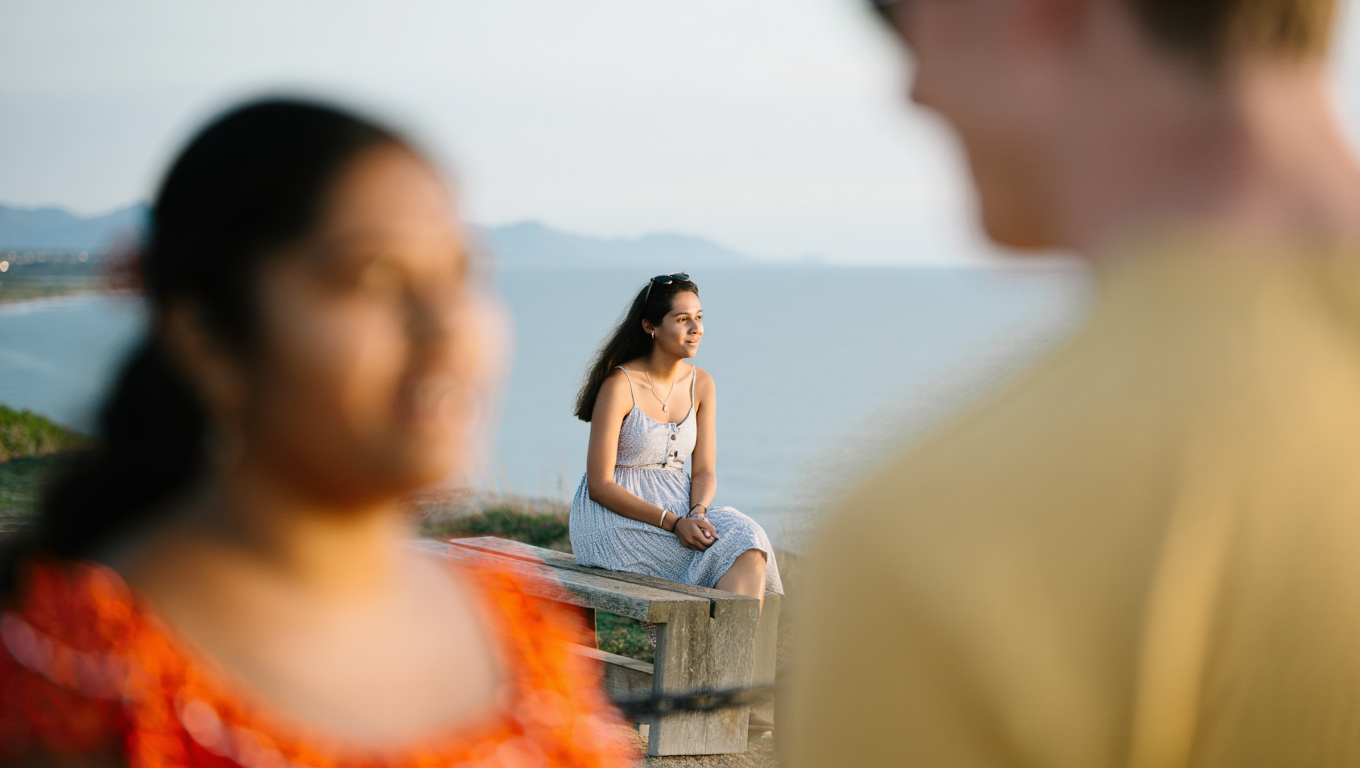
Small, fast, and bright. Perfect for low-light, travel, or when you want that creamy background blur. It’s also less intimidating for candids and family moments (people relax faster).
Case in Point: Summer in Split, Croatia
Let’s get concrete. Last year, I spent two weeks in Split with my family. Here’s how the kit played out:
- Morning beach walks: Zoom at 24mm for wide family shots, 70mm for sneaky portraits of my wife reading.
- Indoor cafes: 35mm prime for low-light, handheld, with enough background for context.
- Old town exploring: Swapping between both was quick (the prime fit in my jacket), but honestly, the zoom covered 80% of the day.
- Video clips: Both lenses handled 4K video like a champ. The stabilized zoom made handheld clips way smoother.
How to Build Your Family-Friendly Kit in 15 Minutes
- Check your camera mount. Are you using Canon, Sony, Nikon, or Fuji? Make sure the lenses fit.
- Pick a 24-70mm (or 24-105mm) zoom with stabilization. For APS-C, look for 16-50mm or 18-55mm (gives similar range).
- Choose a compact prime: 35mm or 50mm, f/1.8 or faster, preferably under 200g.
- Weigh your setup. My kit (Sony A7C + Tamron 28-75mm f/2.8 + Sony 35mm f/1.8) comes in under 1.2kg (camera + both lenses). If it’s over 1.5kg, rethink one piece.
- Test in your house: Snap everyday moments—breakfast, playtime, evening reading. If you miss a shot, ask: was it the lens, or the moment?
Quick Table: Lenses That Work (2024 Edition)
| System | Zoom | Prime | Weight (Zoom/Prime) | Stabilized |
|---|---|---|---|---|
| Sony Full Frame | Tamron 28-75mm f/2.8 | Sony 35mm f/1.8 | 550g / 280g | Yes (zoom) |
| Canon RF | Canon RF 24-105mm f/4-7.1 IS STM | Canon RF 50mm f/1.8 | 395g / 160g | Yes (zoom) |
| Fujifilm X | Fujinon XF 18-55mm f/2.8-4 OIS | Fujinon XF 35mm f/2 | 310g / 170g | Yes (zoom) |
| Micro Four Thirds | Olympus 12-40mm f/2.8 PRO | Panasonic 25mm f/1.7 | 382g / 125g | Yes (body IBIS) |
What About Real Life?
Here’s the deal: I’ve schlepped a bag loaded with four lenses, only to use two. I’ve also gone too minimal (single pancake prime), and missed shots because I couldn’t zoom. The two-lens kit bridges the gap.
Pros:
- Fast to swap. You’ll actually do it.
- Lightweight. Keeps one hand free for ice cream or a toddler.
- Low-light ready. The prime saves you indoors and at dusk.
- Travel-friendly. Everything fits in a tiny shoulder bag.
Cons:
- No super-telephoto. If you want wildlife, you’ll need something longer. But for 90% of family life? You’re covered.
- Primes need footwork. Sometimes you move; sometimes you don’t want to.
Checklist: The 90% Family Photo/Video Kit
- ☑ Camera body with good autofocus and in-body stabilization if possible
- ☑ Zoom lens (24-70mm or similar, with stabilization)
- ☑ Prime lens (35mm or 50mm, f/1.8 or faster, lightweight)
- ☑ 1-2 extra batteries
- ☑ Small travel bag or insert
- ☑ Microfiber cloth (kid fingerprints happen)
Favorite Tools & Resources
- Lensrentals – Try before you buy, or rent for special trips
- DXOMark Lens Database – Compare sharpness/weight
- Ken Rockwell’s Real-World Reviews – Honest, no-nonsense opinions
- PhotoPills – Plan golden hour shoots
Honestly, the best lens is the one you’ll actually carry. Don’t overthink it.
Some links above may be affiliate. You pay the same price, and this blog may earn a small commission. Thanks for helping keep the coffee flowing!