Noise Taming at Home: Rugs, Curtains, and Quiet Tech
Anyone who’s ever tried to run a video call while their neighbor mows the lawn or their toddler tests the limits of human vocal cords knows this: noise at home is relentless. Sometimes it’s ambient traffic, sometimes it’s echoes that make you sound like you’re Zooming from inside a bucket. Either way, after a few years of remote work, I’ve learned that you don’t need a full-blown recording studio to tame the chaos. You just need some soft surfaces, a bit of planning, and a willingness to swap out that clacky keyboard your friends secretly hate.
Why Noise Gets Out of Hand So Fast at Home
Most homes—especially smaller apartments—aren’t built with acoustics in mind. Hard floors, bare windows, and minimal furniture all conspire to bounce sound around like a pinball.
Once, I held a meeting in a near-empty rental with tile floors and zero curtains. My own voice echoed so badly that I started answering myself by accident.
Even if you’re not in a cavernous space, everyday noises—keyboards, the hum of appliances, footsteps—can add up to a distracting mess. The good news: acoustic improvements don’t have to be expensive or ugly.
Case in Point: The “Softening Up” Experiment
Last spring, my family moved into a two-bedroom apartment with hardwood throughout. Great for cleaning, terrible for sound. The first week, I did a quick experiment: I recorded audio before and after adding some basic soft furnishings and tweaks. Here’s what I learned.
Quick Wins: 15-Minute Fixes for a Quieter Home
Most of these can be done in a coffee break, and they really make a difference for both work calls and general peace of mind.
Add Rugs or Carpets
If you do one thing, make it this. Rugs absorb sound and kill echo. You don’t need wall-to-wall carpeting—a medium-sized rug under your desk or in the center of the room will halve the harshness.
- Go for high-pile or shag if you want max absorption.
- Even a cheap IKEA or Ruggable option helps.
- Layer runners in hallways for bonus points.
Hang Curtains—The Thicker the Better
Bare windows bounce sound. Curtains (especially lined or velvet ones) muffle both inside and outside noise.
- Thermal curtains do double-duty for insulation and sound.
- No windows? Hang a tapestry or blanket on a wall. Yes, really.
Seal Gaps in Doors
Most doors leak sound through gaps at the bottom and sides. For $10–$20, you can slap on a door sweep or weatherstrip and instantly notice less hallway noise.
- Draft stoppers work too—just wedge them under the door.
- If you rent, removable strips leave no marks.
Rearrange Furniture for Sound Blocking
Bookshelves, couches, even a pile of laundry baskets can act as makeshift sound barriers. If your desk is against a wall that faces a noisy neighbor, try moving it to the interior of your space or putting a bookcase between you and the source.
Tech Tweaks: Hardware That Makes You Quieter
After soft surfaces, the next big wins come from your gear.
Switch to a Silent Keyboard and Mouse
Mechanical keyboards are fun for typing, but their sound will be the soundtrack of your calls. Swap to a membrane, low-profile, or “silent” model. Trust me: your team will thank you. (I use the Logitech MX Keys and MX Master 3 mouse—both nearly silent and reliable.)
Upgrade Your Mic (and Use It Right)
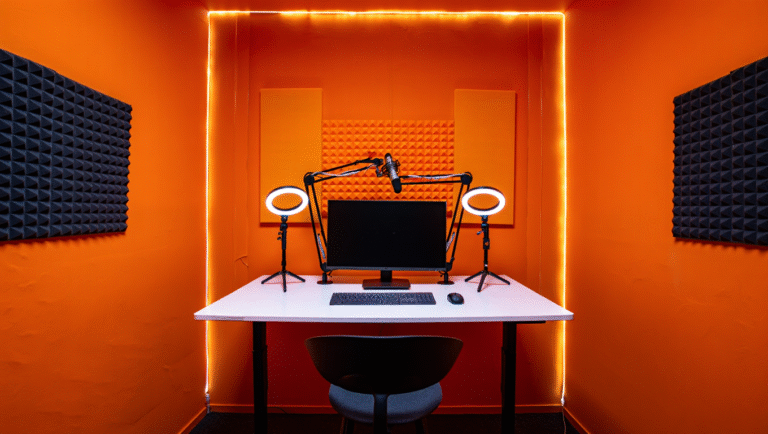
Built-in laptop mics pick up everything: keyboard, pets, traffic. A $40–$60 USB mic (like the Samson Q2U or Blue Snowball) can focus on your voice and cut the rest.
Bonus tip: Use a foam windscreen or pop filter, and keep the mic close—6–8 inches from your mouth. It makes a world of difference.
Noise-Canceling Headphones
For calls, they block out background noise so you can focus. For music, they keep sound from leaking out and bugging your housemates. Sony and Bose rule here, but Anker Soundcore and JBL have solid budget options.
Don’t Forget Software
Apps like Krisp or RNNoise can remove background sounds in real time. Most video call platforms now offer noise suppression, but third-party tools are often better.
Checklist: Quieter Home Office in 15 Minutes
| Task | Time | Cost |
|---|---|---|
| Lay down a rug or carpet | 3 min | $30–$100 |
| Hang curtains or a blanket | 7 min | $20–$80 |
| Install door sweep/weatherstrip | 5 min | $10–$25 |
| Move bookshelf or couch as sound barrier | 5 min | Free |
| Switch to a silent keyboard/mouse | 2 min (just plug in!) | $30–$100 |
| Try noise-canceling headphones | 1 min | $50–$350 |
| Install noise-filtering software | 3 min | Free–$8/month |
Useful Links & Tools
- IKEA Rugs – for affordable, washable sound-absorbing options
- Thermal Curtains on Amazon
- Ruggable – machine-washable area rugs (great for families/pets)
- Krisp Noise Cancellation Software
- Blue Snowball ICE USB Mic
- Logitech MX Keys Keyboard
- Sony WH-1000XM4 Noise Canceling Headphones
Final Thoughts
Noise is part of life at home, but with a few tweaks—many of them cheap, fast, and renter-friendly—you can make your space much more peaceful. Your ears (and your co-workers) will thank you.
Some links above may be affiliate. You pay the same price, and this blog may earn a small commission. Thanks for supporting honest, real-world guides!