How to Reset Your Mindset for Remote Work
If you’ve recently made the leap from a traditional office to working from home, you’ve probably noticed the transition isn’t as breezy as it sounds on those digital nomad blogs. Sure, the commute is short and the coffee is your favorite brand, but suddenly your kitchen table is both your conference room and your kid’s art studio. The real challenge? Resetting your mindset to thrive in this new space—not just for you, but for the people you share your home with.
Why Mindset Matters More Than Your Internet Speed
Let’s be honest: remote work isn’t just about the tech. It’s about rewiring your brain for an entirely different rhythm of life. You’re blending personal and professional worlds in ways you never had to before. Distractions multiply. Boundaries blur. Motivation can nosedive by 2:30 PM, right when your neighbor decides to mow the lawn.
Back when I first started working remotely, I thought a new laptop and noise-cancelling headphones were all I needed. Turns out, my biggest upgrade had to happen in my head.
The Real-Life Case: Two Weeks, One Burnout
Here’s a snapshot from my own life: two weeks into remote work, my productivity tanked. I was ping-ponging between Slack messages, laundry, and snack time for my kids. By Friday, I felt more exhausted than I ever did in the office. After venting to a fellow remote worker, I realized I’d never really reset my mindset—I was just trying to copy-paste my office routine into my living room.
Resetting Your Mindset: The 15-Minute Framework
If you want to actually enjoy remote work (and not just survive it), you need small, actionable shifts. Here’s what helped me—and might help you too.
1. Define Your “On” and “Off” Switches
- Morning trigger: Choose a ritual to signal the start of your workday. For me, it’s making coffee and putting on real pants (yes, even at home).
- Evening shutdown: Something physical that marks the end—closing your laptop, taking a walk, or even switching playlists.
2. Zone Your Space (Even If It’s Tiny)
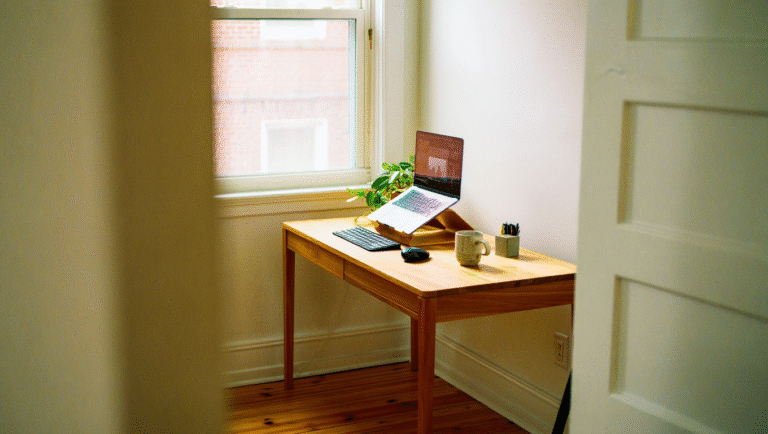
- Dedicated work spot: It doesn’t have to be fancy. I started with a $30 folding table in the corner. The key is consistency.
- Family/friends boundary: Use a sign (mine says “Deep Work” but “Do Not Disturb” is classic) to let others know when you’re in the zone.
3. Micro-Breaks: The Secret Sauce
- Set a timer for every 45-60 minutes. When it goes off, walk away—stretch, refill water, pet your dog. Your brain and body will thank you.
- Use apps like Tomato Timer for Pomodoro sprints.
4. Family Buy-In: Make It a Team Sport
- Family meeting: 10 minutes Sunday night to talk about your schedule and let everyone share their plans. I resisted this for months, but it was a game changer.
- Visual cues: Color-coded calendars on the fridge or shared Google Calendars help avoid “Can you play right now?” interruptions.
5. Reframe Interruptions
- Instead of seeing interruptions as failures, treat them as data. Which parts of the day are most chaotic? Adjust your focus tasks to quieter windows.
- Post-it Rule: If you get interrupted, jot down what you were doing so you can jump back in faster.
Quick Reset Checklist
| Action | Time Needed | Tool/Tip |
|---|---|---|
| Morning ritual | 3 min | Put on work clothes, make coffee |
| Set up workspace | 5 min | Clear desk, sign on door |
| Family check-in | 10 min | Shared calendar |
| Micro-breaks | 1-2 min each | Stretch, breathe, refill water |
| End-of-day shutdown | 2 min | Close laptop, walk outside |
Tools and Links That Actually Help
- Focus Booster – Pomodoro timer with reports
- RescueTime – Tracks productivity patterns
- Figma – For team brainstorming remotely
- Calendly – Scheduling family and team events
- Asana – Task management with family or work
It took me a month to figure out that “remote work” isn’t about location—it’s about intention. The more deliberate you are, the easier it gets.
What I Wish I’d Known
The first few weeks are awkward—accept it. You’ll try routines that flop, have days where you feel like you’re living at work instead of working from home, and maybe eat too many snacks. But if you keep resetting (and don’t expect perfection), you’ll find your groove.
Pro tip: If you’re struggling, ask another remote worker what works for them. Even the pros are making it up as they go along—just a little more intentionally.
Some links in this post may be affiliate links. You pay the same price, but I might earn a small commission—no guru vibes, just honest recommendations that help support this site.
Thanks for reading, and remember—remote work is a journey, not a destination. The real win is finding what fits your life, not someone else’s Instagram feed. Here’s to a mindset that works wherever you do.